Your need for cervical screening depends on your age, past results, medical history and whether your cervix is still present—not simply on whether you live in Thane or have had the HPV vaccine. By the end, you will know which screening pathway may apply to you, when symptoms require diagnostic care instead, and what information to prepare for a consultation.
Key takeaways
- Average-risk screening often starts at age 21 under international guidelines.
- India’s national programme commonly targets women aged 30–65 with VIA.
- Pregnancy, symptoms and previous abnormal results require individual medical advice.
- Bring your treatment history, test reports and medication list to the appointment.
Who should start cervical screening, and when can it stop?
Pap smear eligibility in Thane follows age and medical risk, not residence. For average-risk women, routine screening often starts at 21 in international guidelines, while India’s national cervical-cancer programme targets women aged 30–65, commonly using visual inspection with acetic acid (VIA) where HPV testing or cytology is unavailable.
- If you are 30–65, ask a clinician which locally available screening method suits you. Sexual activity does not create a separate starting age, and never having penetrative sex does not automatically remove the need for age-based advice because HPV can spread through intimate skin-to-skin contact.
- HPV vaccination lowers cervical-disease risk but does not eliminate HPV or replace screening. Vaccinated women remain eligible for the recommended screening pathway.
- Menopause is not a reason to stop. Continue screening through age 65 unless you meet the evidence-based stopping criteria: three negative cytology results, or two negative HPV-based tests, within the previous 10 years, with the latest test within five years.
- Do not stop at 65 if records are missing, results were abnormal, you had high-grade precancer or cervical cancer, or your clinician identifies increased risk. A total hysterectomy removing the cervix may end screening when there is no such history; a retained cervix requires screening.
A Pap smear is for people without symptoms. Seek examination for bleeding after sex or menopause, persistent unusual discharge, pelvic pain, or a visible cervical abnormality, even after a normal test.
Pap cytology, HPV testing or co-testing: which method and interval apply?
At ages 30–65, average-risk women usually choose one of three evidence-based cervical screening schedules. The best option for cervical screening for women in Thane depends on which validated test the laboratory and clinician provide, so do not assume every cervical-screening appointment is a Pap smear.
| Option | Test | Usual interval | What it checks |
|---|---|---|---|
| Pap cytology | Cervical cells examined for abnormal changes | Every 3 years | Cell changes that could become precancer |
| Primary high-risk HPV test | Tests for cancer-linked HPV types | Every 5 years | The infection that causes most cervical cancers |
| Co-testing | High-risk HPV test plus Pap cytology | Every 5 years | HPV infection and cell changes together |
For average-risk women aged 21–29, cytology every three years is commonly used. Routine co-testing is usually avoided in this age group because HPV infections often clear without treatment.
A positive high-risk HPV result or abnormal Pap result does not mean you have cancer. Follow-up depends on the exact result, previous results and risk history. It may involve repeat HPV or cytology testing, a triage test, or colposcopy with biopsy.
Before leaving, confirm which result requires action, when the next test is due, and how the clinic will contact you. A normal result does not cancel follow-up for new symptoms.
When pregnancy, symptoms or past illness change the screening plan
Pap smear eligibility in Thane depends on risk and medical history, not residence. Screening is for people without symptoms; bleeding after sex, bleeding after menopause, persistent unusual discharge, pelvic pain or a visible cervical change requires examination and diagnostic testing, even after a normal result.
Pregnancy does not automatically cancel a due screening test, but the clinician chooses the safest timing and avoids procedures unsuitable during pregnancy. Complete postpartum recovery before collection if the test can wait.
- After pregnancy: Arrange follow-up after childbirth when healing and bleeding have settled; an abnormal result needs its own pregnancy-safe plan.
- After total hysterectomy: Routine cervical screening usually ends when the cervix was removed for a benign reason and there is no history of high-grade precancer. A supracervical hysterectomy leaves the cervix, so screening continues.
- After cervical surgery: Bring the procedure and pathology reports. Treatment for cervical precancer changes the interval and can require surveillance for at least 25 years.
- With HIV or immunosuppression: Do not use the average-risk three- or five-year schedule; earlier testing and closer follow-up may be necessary.
- After cervical cancer: Follow the oncologist’s surveillance plan rather than routine screening intervals.
Cervical screening for women in Thane also differs after previous abnormal cytology or detected high-risk HPV: the next step may be repeat testing, colposcopy or treatment, depending on the result and prior records. A history of cancer or high-grade disease can require long-term surveillance after age 65.
What to tell the clinician and how to prepare for the appointment
Tell the clinician about bleeding after sex, bleeding after menopause, persistent unusual discharge, pelvic pain, sores, or pain during intercourse. These symptoms need examination even after a normal Pap result. Also disclose your last period, possible pregnancy, HIV or immunosuppressive treatment, previous abnormal results, cervical procedures, hysterectomy, and current medicines.
Bring:
- Previous Pap, HPV, colposcopy, biopsy, or cervical-surgery reports
- Your last screening date and vaccination record, if available
- A list of medicines, including vaginal creams, tablets, or antifungal treatment
- Details of bleeding, discharge, pain, fever, or recent infection treatment
Avoid vaginal intercourse, douching, and vaginal medicines for about 48 hours before collection. These substances can obscure cervical cells. Do not postpone evaluation of worrying symptoms just to obtain a cleaner screening sample.
| Situation | What to do | Why it matters |
|---|---|---|
| Heavy menstrual bleeding | Ask whether to reschedule; keep the appointment if symptoms need assessment | Blood can make the sample harder to interpret |
| Possible pregnancy | Tell the clinician before the speculum examination and ask whether a pregnancy test is needed | Pregnancy changes how examination and follow-up are planned |
| Discharge, itching, odour, sores, or burning | Report these before collection; ask whether infection testing or treatment comes first | A Pap test does not replace diagnosis of vaginal or cervical infection |
| Vaginal treatment or recent intercourse | State when it occurred and follow the clinician’s timing advice | The sample may contain medication, lubricant, or fewer readable cells |
A Pap test consultation in Thane should confirm the laboratory method, while a discussion of Pap smear eligibility in Thane should account for your history rather than age alone. Eva Bloom Clinic - +919326019481 can record these details and clarify whether screening or symptom-led examination is appropriate.
Related service
PAP smear and Cervical Cancer Screening PAP smear and Cervical Cancer Screening ₹1000 Pap smear is an essential screening test for early detection of cervical cancer and infections. View service → |
How to make a safe follow-up plan after screening
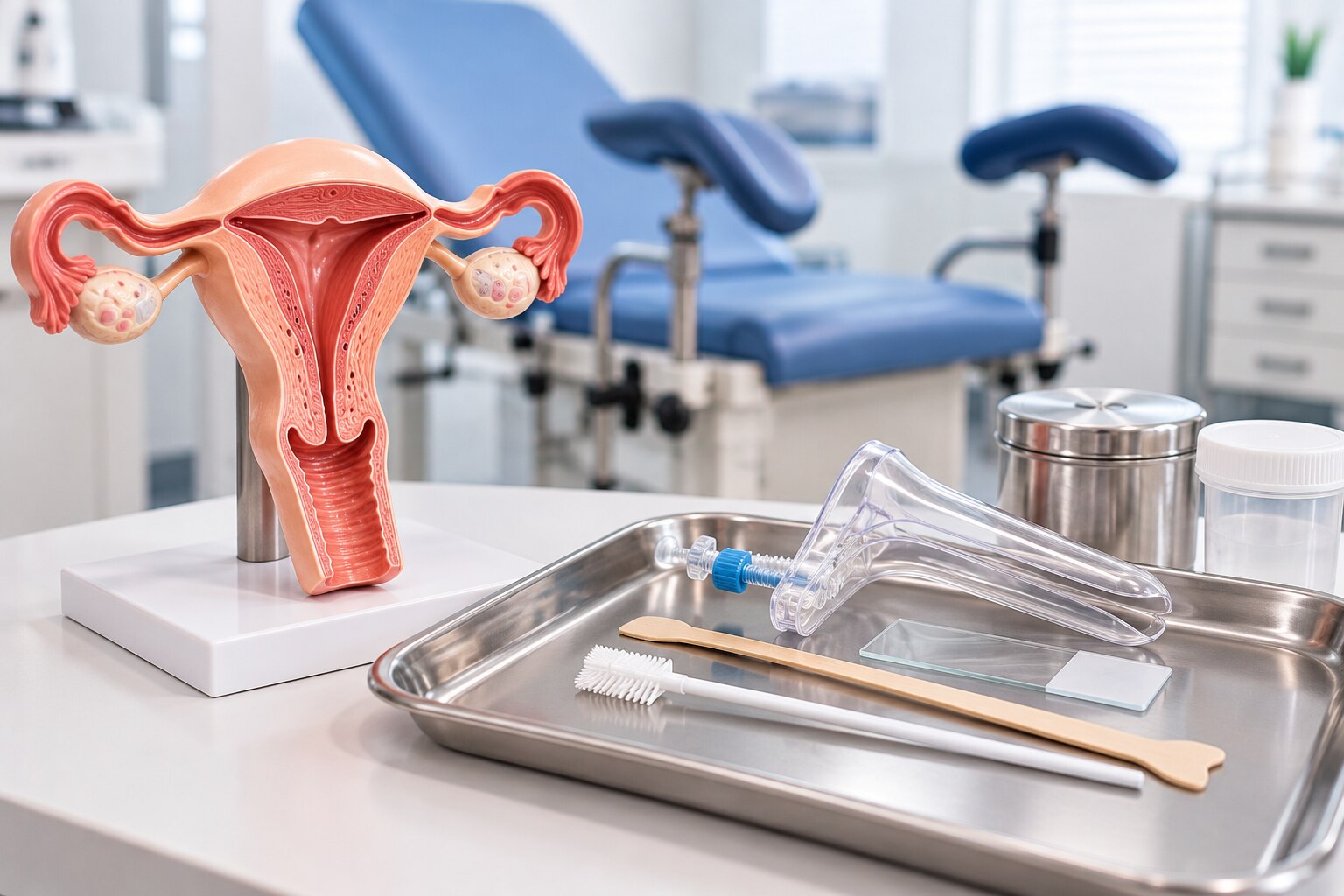
Before you leave a cervical screening for women in Thane appointment, confirm exactly which test was collected. A Pap cytology test examines cervical cells; primary high-risk HPV testing looks for cancer-linked HPV types; co-testing does both. Do not assume that every cervical-screening appointment uses a Pap smear.
1. Ask the clinic which method was used, which laboratory processed it, and when the report will be ready. Record the collection date and request the written result, including terms such as “negative,” “ASC-US,” “LSIL,” “HSIL,” or “HPV detected.”
2. Ask who will explain the result and what date you should contact them if no report arrives. A Pap test consultation in Thane is incomplete if an abnormal result has no documented follow-up appointment or responsible clinician.
3. If cytology is abnormal or high-risk HPV is detected, ask which action fits your result and previous history: repeat HPV or cytology testing, a triage test, or colposcopy with possible biopsy. A positive HPV result or abnormal cells do not prove cancer, but ignoring the recommended next step can delay diagnosis.
4. Seek examination for bleeding after sex, bleeding after menopause, persistent unusual discharge, pelvic pain, or a visible cervical change, even after a normal screening result. Screening checks people without symptoms; it does not explain new symptoms, and a previous normal test does not cancel that need.
Frequently asked questions
Who should start cervical screening, and when can it stop?
International guidelines often begin screening at age 21 for average-risk women. India’s national programme commonly targets women aged 30–65. Your clinician should confirm the start and stopping age based on previous results, medical history and risk factors.
Which is better: Pap cytology, HPV testing or co-testing?
The appropriate test and interval depend on your age, local availability, previous results and risk level. Pap cytology examines cervical cells, HPV testing checks for high-risk HPV, and co-testing uses both. Follow the interval your clinician recommends rather than combining tests without advice.
Does pregnancy or a past abnormal result change cervical screening?
Pregnancy, abnormal bleeding, symptoms, immune suppression, previous cervical disease or treatment can change the timing and follow-up plan. Tell the clinician about these factors before testing.
How should I prepare for a Pap smear appointment?
Tell the clinician about your last period, pregnancy possibility, symptoms, prior results, procedures and medicines. Ask how to prepare and follow instructions about intercourse, vaginal medicines or bleeding before the appointment.
Keywords