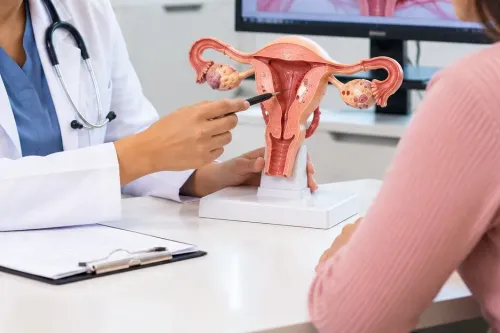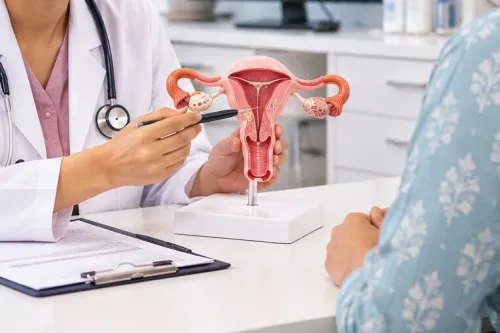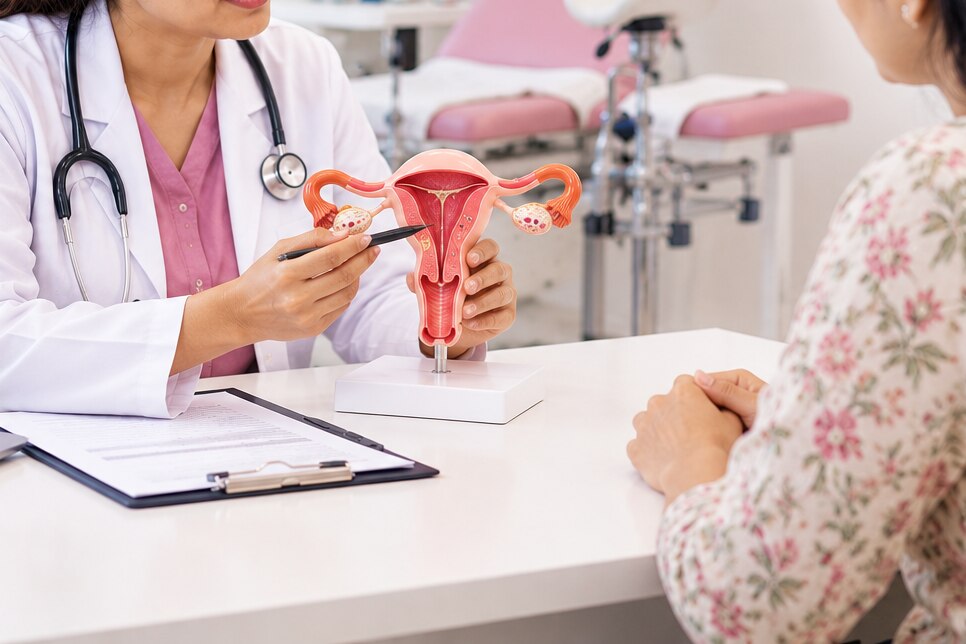
A first gynecology visit is usually a clinical assessment, not a fixed package of scans and tests. Knowing what happens at each stage, what to bring, and which symptoms need urgent care helps you arrive prepared and decide whether you need a routine consultation, screening visit, or specialist appointment.
Key takeaways
- Bring your medication list, previous reports and a clear record of symptoms.
- A first visit does not automatically include an ultrasound or test package.
- Tell the gynecologist about bleeding, pain, discharge, contraception and pregnancy concerns.
- Routine, prenatal, fertility and surgical consultations follow different assessment paths.
What happens from registration to discharge at a general gynecology appointment?
A general gynecology appointment in Thane starts with registration, basic details and a private clinical assessment, not an automatic ultrasound or test package. Staff record your name, age, contact details and reason for visiting before the gynecologist reviews your concerns confidentially.
| Stage | What happens | What you should know |
|---|---|---|
| Registration | Basic details and reason for visit are recorded | Ask for private discussion of sensitive information |
| History | The clinician asks about the first day of your last menstrual period, cycle length, regularity, bleeding, pain, discharge, urinary and bowel symptoms, pregnancy possibility, sexual and STI history, previous pregnancies, operations, medicines, allergies and contraception | Bring reports and a current medicine list |
| Vitals | Blood pressure and other vital signs are checked | Abnormal readings can change the assessment |
| Examination | The clinician decides whether an abdominal, external genital, speculum or bimanual pelvic examination is indicated | None is automatic for every asymptomatic patient |
| Discharge | Findings, relevant tests, treatment or observation, and follow-up are explained | Leave knowing what happens next |
Before any examination, the gynecologist explains the steps and asks for consent. You can request a chaperone, ask questions, or tell the clinician to stop at any point. STI testing, urine or blood tests, ultrasound and cervical screening are recommended only when symptoms, age, pregnancy possibility, medical history or risk factors make them relevant.
This is the core experience of a gynecologist appointment in Thane: assessment, shared decisions and a documented follow-up plan, not a guaranteed test bundle.
Which symptoms and questions belong in a general gynecology consultation?
A routine consultation suits concerns that are persistent, troublesome or changing, but urgent symptoms need same-day care. Bring up:
- Abnormal, prolonged or heavy bleeding
- Missed, irregular or painful periods
- Vaginal discharge, itching or irritation
- Pelvic or lower abdominal pain
- Urinary symptoms
- Fertility questions
- Menopause symptoms
- Sexual-health concerns
- Contraception decisions
- Possible STI exposure
Discharge does not prove candidiasis. Candidiasis, bacterial vaginosis, trichomoniasis, cervicitis and non-infectious irritation can produce overlapping symptoms, so repeated creams, antibiotics or home treatments are not a diagnosis.
Tell the clinician whether pregnancy is possible, whether you have a new partner, whether a condom failed, and whether you want pregnancy now, later or not at all. These details change pregnancy testing, STI tests, medicines and other treatment decisions.
Contraception counselling in a women health consultation in Thane should cover:
- Pregnancy plans and method effectiveness
- Expected bleeding changes and other side effects
- Contraindications and emergency contraception
- STI protection
Hormonal contraception does not protect against STIs; condoms may still be needed.
| Concern | Useful questions | Assessment may include |
|---|---|---|
| Discharge | Could this be an infection or irritation? | Examination or targeted samples |
| Possible exposure | Which tests and when? | Vaginal, cervical, urine, throat or rectal samples; HIV, syphilis, hepatitis B or C discussion |
| Contraception | Which option fits my health and plans? | Benefits, risks and alternatives |
Seek same-day assessment for very heavy bleeding with dizziness or fainting, severe or one-sided pain, shoulder-tip pain with possible pregnancy, fever with pelvic pain, or suspected ectopic pregnancy.
What should you bring and how should you prepare?
Bring a concise health record to your gynecologist appointment in Thane; preparation helps the clinician choose relevant examination and tests instead of assuming you need an ultrasound or fixed package. Use a phone note or symptom diary, especially if symptoms change between visits.
- Record the first day of your last menstrual period, usual cycle length, regularity, bleeding duration, flow and clots.
- Note when each symptom began, what worsens it, pain severity, discharge, urinary or bowel changes, and whether pregnancy is possible.
- Write your contraception method, pregnancy intentions, operation history, allergies, and every current medicine or supplement with its dose.
- Carry previous ultrasound, blood, urine, STI and cervical-screening reports, including abnormal results and treatment dates.
Ultrasound preparation depends on the scan planned:
| Scan | Bladder preparation | What to do |
|---|---|---|
| Transabdominal pelvic ultrasound | Full bladder may be requested | Ask the clinic how much water to drink and when |
| Transvaginal ultrasound | Empty bladder is usually preferred | Use the toilet before the examination unless instructed otherwise |
Ask the clinic to confirm which scan is planned. Before an examination or sample collection, ask whether to use vaginal creams, pessaries, washes or medicines; these products can affect assessment or results.
Menstruation does not automatically require cancellation. Keep the appointment for pain, heavy bleeding, pregnancy concerns or other symptoms, but ask whether bleeding affects a planned cervical sample. A pregnancy test can be appropriate for a non-pregnancy complaint when pregnancy is possible because it changes medication, imaging and procedure decisions.
This preparation also suits a general gynecology appointment in Thane.
Which examinations and tests might be offered at the first visit?
Testing is chosen from your symptoms, age, pregnancy possibility, medical history and risk factors—not from a routine bundle. At a gynecology clinic in Thane, an asymptomatic patient does not automatically need a pelvic examination or every available test.
| Assessment | What it may answer | When it is considered |
|---|---|---|
| Abdominal, external, speculum or bimanual examination | Tenderness, discharge, lesions, cervical or pelvic findings | Pain, bleeding, discharge or examination history indicates it |
| Breast examination and blood-pressure measurement | Breast or cardiovascular concerns | Symptoms, medicines, pregnancy care or clinical history warrants them |
| Urine testing, blood pregnancy testing, complete blood count or thyroid testing | Infection, pregnancy, anemia or thyroid-related cycle changes | Urinary symptoms, pregnancy possibility, heavy bleeding or irregular cycles |
| STI testing | Infection after symptoms or exposure | Vaginal, cervical, urine, throat or rectal samples may be used |
| Pelvic ultrasound or endometrial assessment | Fibroids, ovarian masses, pregnancy location or structural bleeding causes | Findings from the history and examination point to them |
For abnormal bleeding, pregnancy testing and a complete blood count come first when relevant. Thyroid testing, ultrasound or endometrial assessment follows according to the findings and risk profile; a large hormone panel does not replace clinical assessment.
STI discussions can include HIV, syphilis, hepatitis B and hepatitis C. Tell the clinician privately about a new partner, condom failure or possible exposure.
Ultrasound does not exclude every cause of pain, including some endometriosis. Cervical screening is separate from a pelvic examination and a general women health consultation in Thane; eligibility and timing depend on age, history, previous results and local guidance.
How do routine, screening, prenatal, fertility and surgical consultations differ?
Book by the reason for the visit, not by the test you expect. A general gynecology appointment in Thane starts with symptoms and medical history, followed by a focused examination or selected testing. A pelvic examination is not automatic for every asymptomatic patient.
| Visit | Main focus | What to expect |
|---|---|---|
| Routine | Symptoms or ongoing concerns | History, pregnancy possibility, focused examination, and relevant urine, blood, imaging or STI testing. |
| Urgent same-day | Red flags | Severe or one-sided pain, very heavy bleeding with dizziness, fever with pelvic pain, or shoulder-tip pain with possible pregnancy can require emergency pregnancy testing, blood tests, imaging or treatment instead of routine follow-up. |
| Cervical screening | Cervical-cell or HPV sampling | Eligibility and preparation, positioning, a speculum, brief discomfort, and sampling. Reports may say NILM, ASC-US or LSIL; follow-up depends on the full report and clinician’s advice, not the label alone. |
| Prenatal | Pregnancy monitoring | Pregnancy dating, maternal health, symptoms and monitoring. |
| Fertility | Difficulty conceiving or planning evaluation | Both partners’ history, ovulation, semen testing and investigations chosen for the situation. |
| Surgical | A procedure decision | Diagnosis, alternatives, risks, consent, anaesthesia, recovery and required reports. |
When comparing a gynecology clinic in Thane, ask about private history-taking, consent-based examinations, on-site or referred testing, result communication and documented follow-up. Eva Bloom Clinic - +919326019481 is a local option to contact and confirm whether routine, screening, prenatal, fertility or surgical booking fits your concern.
Frequently asked questions
What happens during a general gynecology appointment?
Registration comes first, followed by a confidential discussion of your concerns, medical history and symptoms. The gynecologist then recommends an examination or tests when they are relevant, explains the findings and discusses next steps before discharge.
What should I bring to a gynecologist appointment in Thane?
Bring previous medical reports, prescription details, a list of medicines and supplements, menstrual dates, allergy information and questions you want answered. Carry pregnancy-related records when the appointment concerns prenatal care.
Will I automatically need an ultrasound at my first gynecology visit?
No. The gynecologist chooses an ultrasound or other test based on your symptoms, examination and medical history. A general appointment does not automatically include an ultrasound or bundled test package.
Which symptoms should I discuss during a general gynecology consultation?
Mention pelvic or abdominal pain, unusual bleeding, missed or irregular periods, vaginal discharge, itching, pain during sex, urinary symptoms, fertility concerns, contraception needs and pregnancy questions.
How do routine, prenatal, fertility and surgical consultations differ?
A routine consultation addresses preventive care and everyday reproductive health. Prenatal visits monitor pregnancy, fertility consultations assess conception concerns, and surgical consultations focus on a possible procedure, its alternatives, preparation and recovery.
Keywords