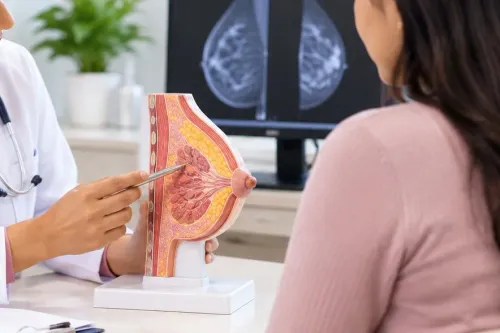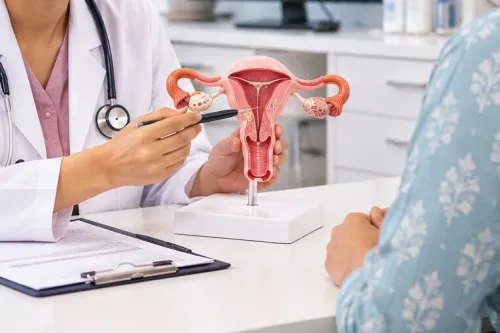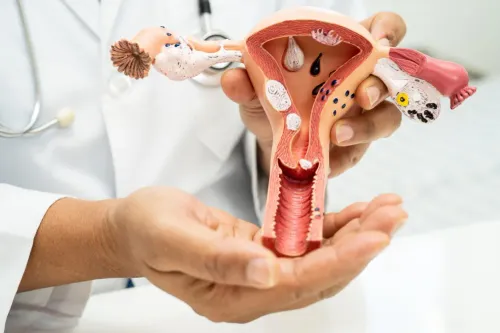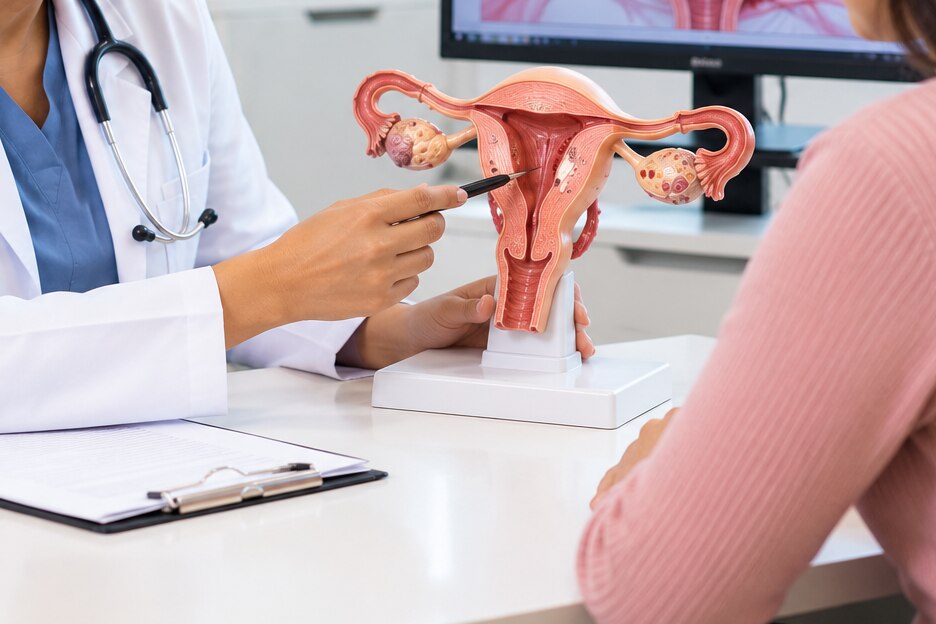
Symptoms that follow your menstrual cycle can involve the bowel, bladder, sexual activity, energy levels and daily functioning—not only period pain. You will learn what to record, what an assessment involves, how clinicians compare endometriosis with other conditions, and how to judge whether a proposed treatment plan fits your health and pregnancy goals.
Key takeaways
- Track cycle-linked pain, bleeding, bowel symptoms and fertility concerns before your appointment.
- Seek urgent care for severe sudden pain, fainting, heavy bleeding or possible pregnancy complications.
- Ask how imaging, adenomyosis and other causes will be assessed before choosing treatment.
- Match treatment with pain severity, fertility plans, medication tolerance and surgical risks.
Which symptoms suggest endometriosis, and when should you seek urgent care?
Painful periods are only one clue. Endometriosis can cause persistent pelvic pain, deep pain during or after sex, painful bowel movements, painful urination during periods, or bowel and bladder symptoms that recur with your cycle. Fatigue, difficulty conceiving, and disruption to work, sleep, relationships or daily activities also deserve assessment.
Pain severity does not confirm how much endometriosis is present. Extensive disease can cause little pain, while severe pain can occur with limited visible disease. A normal pelvic examination or ultrasound does not rule out endometriosis, so ask an endometriosis doctor in Thane for further assessment when symptoms persist or follow a cyclical pattern.
| Situation | Warning signs | What to do |
|---|---|---|
| Appointment soon | Repeated pelvic pain, deep sex pain, cyclical bowel or urinary symptoms, fatigue, difficulty conceiving, or symptoms affecting daily life | Arrange a consultation and take your period dates, symptom pattern, scan reports, medication list and fertility goals |
| Same-day medical advice | Pain that is worsening, persistent vomiting, inability to pass urine or stool, or bleeding that is heavier than your usual period | Contact a doctor or urgent-care service today |
| Emergency care | Sudden severe pelvic pain, fainting, fever with significant pain, heavy bleeding causing weakness or dizziness, or pain and bleeding with a possible pregnancy | Go to an emergency department immediately |
Do not rely on painkillers masking the problem as proof that it is harmless. Seek reassessment if symptoms persist, recur or change after treatment.
What happens during an endometriosis consultation in Thane?
Your first endometriosis consultation in Thane starts with a detailed discussion, not a diagnosis based on pain intensity alone. The clinician will ask how symptoms affect work, sleep, relationships and daily activities, because daily-life impact matters even when pain is difficult to describe.
Bring period dates, prior scan reports, surgery notes and a medication list if available. A symptom and menstrual diary can reveal cyclical patterns, but not having one should not delay your appointment. Expect questions about:
- Pain timing, location, duration and relation to menstruation
- Bleeding pattern, cycle length and changes over time
- Pain during or after sex
- Painful bowel movements, bloating or bowel changes around periods
- Painful urination or urinary symptoms that follow your cycle
- Fatigue, difficulty sleeping and missed work or activities
- Family history of endometriosis or related pelvic conditions
- Previous pelvic surgery, diagnoses and hormonal or pain treatments
Discuss pregnancy goals at this visit, including whether you are trying to conceive now, want pregnancy later or need contraception. That information changes how the clinician weighs hormonal treatment, fertility evaluation and referral options.
A physical examination may include abdominal assessment and, with your consent, a pelvic examination. It may identify tenderness or other causes of symptoms, but a normal examination does not rule out endometriosis. Ask what each finding means and when follow-up is needed if symptoms persist, recur or change.
How are endometriosis, adenomyosis and other causes distinguished?
Clinicians distinguish these conditions by matching pain timing, bleeding, bowel and urinary symptoms, examination findings and imaging—not by one symptom alone. An endometriosis specialist in Thane will also consider pregnancy plans, previous surgery and whether symptoms follow a monthly pattern.
| Condition | Clues that shift the assessment | Findings that support it |
|---|---|---|
| Endometriosis | Cyclical pelvic pain, deep pain during sex, painful bowel movements or urination | Endometriomas or deep lesions; superficial disease can remain unseen |
| Adenomyosis | Heavy bleeding, painful periods and an enlarged, tender uterus | Changes within the uterine muscle on ultrasound or MRI |
| Fibroids | Heavy or prolonged bleeding, pressure or fertility problems | Benign masses arising from the uterus |
| Ovarian cyst | One-sided pain, pressure or sudden severe pain if it ruptures or twists | Fluid-filled or solid ovarian lesion on ultrasound |
| Pelvic inflammatory disease | Persistent pelvic pain, fever, unusual discharge or pain with cervical movement | Examination and infection testing; imaging may show complications |
| Urinary conditions | Burning, urgency, blood in urine or pain linked to bladder filling | Urine testing and, when needed, urinary imaging |
| Irritable bowel syndrome | Abdominal pain linked to bowel movements, diarrhoea or constipation | Symptom pattern after other causes are assessed |
| Painful periods without visible disease | Menstrual cramps without another identified pelvic disorder | Diagnosis based on history after assessment excludes other causes |
A pelvic examination may find tenderness, nodules or reduced movement, but a normal result does not exclude endometriosis. Transvaginal ultrasound can identify endometriomas, fibroids, adenomyosis and some deep lesions; a normal scan does not rule out superficial disease. Pelvic MRI can map suspected deep disease, but an experienced practitioner must interpret either scan.
How should treatment be matched to symptoms, fertility plans and surgical risks?
Match treatment to your pain pattern, pregnancy plans and tolerance for surgical risk. During an endometriosis consultation in Thane, discuss pain medicines such as non-steroidal anti-inflammatory drugs, hormonal suppression, and fertility-focused care rather than assuming severe symptoms require surgery.
| Option | Main purpose | Important limitation |
|---|---|---|
| Pain medicines | Reduce inflammation and pain | Do not remove endometriosis or improve fertility |
| Hormonal treatment | Suppress ovulation, bleeding and lesion activity | Not a fertility treatment while trying to conceive |
| Fertility-focused care | Assess other infertility causes and plan conception support | May require referral to a fertility specialist |
If you are trying to conceive, hormonal contraceptives are not the route to pregnancy. A plan may include fertility testing, assessment of the tubes and sperm, and referral for assisted conception when appropriate.
A clinician searching for an endometriosis specialist in Thane should also check experience with deep disease and coordinated fertility, pain and surgical care.
1. Consider laparoscopy when symptoms persist despite appropriate medical treatment, imaging suggests an endometrioma or deep disease, infertility requires clarification, or surgery could reasonably improve pain or function. It takes place under general anaesthesia; the surgeon may remove lesions and send tissue for biopsy. Recovery ranges from days to several weeks, and symptoms can recur.
2. Discuss injury to the bowel, bladder, ureters and blood vessels, as well as reduced ovarian reserve. Excision of an ovarian endometrioma can reduce recurrence and pain more than drainage and coagulation, but ovarian tissue can be lost.
3. Surgery is not automatically the first step. Bilateral or repeat ovarian surgery deserves particular caution, especially when future fertility matters.
How do you choose an endometriosis care clinic in Thane and plan follow-up?
A credible endometriosis care clinic in Thane should offer a care pathway, not only a scan or a one-time label. Check whether the clinician can assess deep endometriosis and explain who interprets imaging, manages pain, addresses fertility, and coordinates surgery when required.
Compare providers using these questions:
- Does the clinician have experience with deep endometriosis involving the bowel, bladder, ureters or pelvic nerves?
- Can you access expert transvaginal ultrasound or pelvic MRI, with the report interpreted alongside your symptoms?
- Is there a clear pathway for pain management and a separate fertility plan if you are trying to conceive?
- Does the clinic refer to an experienced surgeon or coordinate gynaecology, radiology, fertility, pain and colorectal or urology input?
- Will each review record your pain, bleeding, bowel and bladder symptoms, medicines, side effects, fertility plans and daily functioning?
| Criterion | What to verify | Why it matters |
|---|---|---|
| Deep disease | Experience with deep endometriosis | Superficial assessment can miss disease affecting organs |
| Imaging | Specialist ultrasound or MRI access | Image quality and interpretation affect treatment choices |
| Treatment response | Written follow-up plan | Persistent symptoms need reassessment, not automatic medication continuation |
Eva Bloom Clinic - +919326019481 can be considered if its consultation gives you this documented coordination rather than relying on the clinic name alone. Arrange review when symptoms persist, return after improvement, change pattern, or side effects interfere with treatment; pain medicines control symptoms but do not confirm or remove the disease.
Related services
Endometriosis Treatment ₹1000 Endometriosis can cause severe pelvic pain, painful periods and fertility concerns. View service → |
Hormonal Imbalance Treatment ₹1000 Hormonal imbalance in females can cause irregular periods, weight changes, acne, mood swings and fertility issues. View service → |
Frequently asked questions
Which symptoms suggest endometriosis, and when should you seek urgent care?
Possible signs include cycle-linked pelvic pain, deep pain during sex, painful bowel movements or urination, fatigue, infertility and symptoms affecting daily life. Seek urgent care for sudden severe pain, fainting, heavy bleeding, fever, persistent vomiting or pain with a positive pregnancy test.
What happens during an endometriosis consultation in Thane?
The doctor reviews your pain pattern, periods, bowel and bladder symptoms, medicines, previous surgery and fertility plans. Expect a focused examination when appropriate, discussion of ultrasound or MRI, and a treatment plan with follow-up steps.
How are endometriosis, adenomyosis and other causes distinguished?
Your clinician combines symptom timing, examination findings and imaging. Ultrasound can assess the uterus, ovaries and deep endometriosis; MRI can clarify adenomyosis or complex disease. Fibroids, ovarian cysts, pelvic infection, irritable bowel syndrome and urinary conditions may also need consideration.
How should treatment be matched to symptoms, fertility plans and surgical risks?
Treatment decisions depend on pain, bleeding, organ involvement, pregnancy goals, prior treatment and surgical risk. Options can include pain medicines, hormonal suppression, fertility-focused care or surgery when symptoms, anatomy or failed medical treatment justify it.
How do you choose an endometriosis care clinic in Thane and plan follow-up?
Choose an endometriosis care clinic in Thane that offers structured assessment, relevant imaging referrals, fertility counselling, medication review and clear surgical referral pathways. Agree on symptom goals, warning signs, review timing and what happens if the first treatment fails.
Keywords