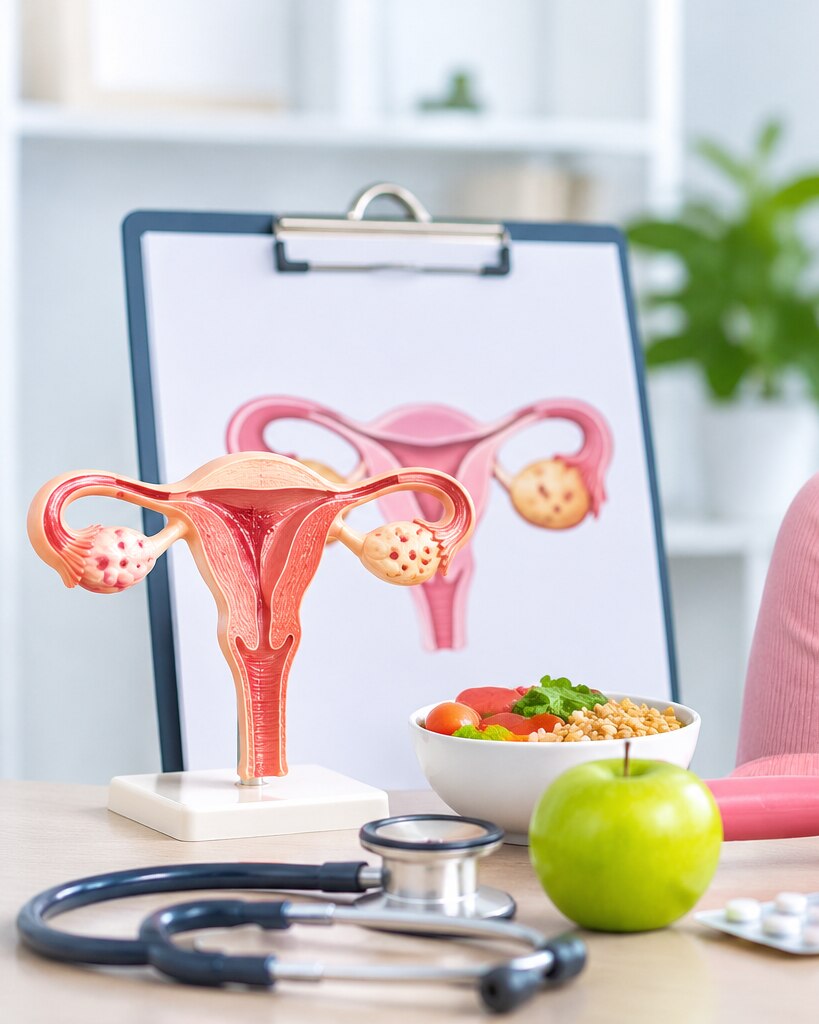
A first PCOS appointment is not just a request for hormone tests or an ultrasound. You will move through preparation, symptom and cycle review, checks for other causes, diagnostic assessment, shared treatment decisions and planned monitoring, with the sequence adjusted to your age, symptoms and pregnancy goals.
Key takeaways
- Record cycle dates, symptoms, medicines and pregnancy plans before your appointment.
- PCOS diagnosis requires two of three features after other causes are excluded.
- Treatment changes when pregnancy is a current goal.
- Seek review for heavy bleeding, severe pain or concerning medication effects.
Before the first appointment: what to book, record and bring
Book a PCOS consultation and tell the clinic what you want help with: irregular bleeding, acne, excess hair, metabolic concerns or pregnancy. These details start the PCOS treatment process and help organise the PCOS consultation steps around your priorities.
1. Record your menstrual pattern for the past six to 12 months. Note the first day of each period, the number of bleeding days, unusually heavy bleeding and skipped months. Also write down the date of your last period and whether pregnancy is possible.
2. Note when each symptom began: acne, scalp hair loss, facial hair, weight change, sleep problems and mood symptoms. A timeline prevents one recent cycle or symptom from dominating the assessment.
3. Bring previous blood-test reports, pelvic ultrasound reports and discharge summaries. Add a complete list of every medicine and supplement you take, including the dose and how often you take it.
4. Write down family history of diabetes, thyroid disease, irregular cycles and infertility. Tell the clinician whether symptoms changed quickly, because sudden progression needs careful assessment.
5. If you are an adolescent, record the date or age of your first period. Cycle irregularity soon after menarche can reflect normal maturation, so the time since menarche changes how the clinician interprets your pattern.
Keep the information on your phone or in a notebook, and bring the original reports when possible.
Inside the consultation: the questions that shape the assessment
The PCOS diagnosis and treatment visit starts with a detailed history, not an automatic label. The clinician reviews period dates, bleeding length, skipped months, ovulation clues, pregnancy possibility, past pregnancies, contraception, medicines and supplements.
They also ask about recent weight change, diet, physical activity, sleep, mood and family history of diabetes, thyroid disease, irregular cycles or infertility. These PCOS consultation steps help distinguish a long-standing pattern from a recent change.
| Concern | Questions asked | Why it matters |
|---|---|---|
| Irregular cycles | When was your last period? How long are cycles? | Shows possible ovulatory dysfunction |
| Androgen-related symptoms | When did acne, unwanted facial or body hair, or scalp thinning begin? How quickly did they progress? | Rapid change needs a broader assessment |
| Pregnancy and fertility | Could you be pregnant? Are you trying to conceive? | Changes testing and treatment choices |
| Metabolic health | Have you had high blood pressure, high blood sugar or major weight change? | Guides diabetes and cardiovascular risk assessment |
| Treatment goals | Do you want predictable bleeding, acne or hair treatment, metabolic support or pregnancy? | Prevents a one-size-fits-all plan |
A physical examination requires your consent and depends on your symptoms. It may include weight-related measurements, blood pressure and signs of androgen excess.
The clinician considers thyroid disease, high prolactin, pregnancy, perimenopause, medication effects and other endocrine disorders before confirming PCOS. A sudden deep voice or quickly progressive facial hair needs evaluation for causes beyond typical PCOS.
What happens during PCOS treatment should end with a clear plan: proposed tests, review timing and immediate safety advice.
Testing and diagnosis: how PCOS is confirmed or ruled out
At a PCOS diagnosis and treatment visit, adults are generally diagnosed when at least two of three features are present after other causes are excluded: ovulatory dysfunction, clinical or biochemical androgen excess, and polycystic ovarian morphology. A single hormone panel cannot establish or rule out PCOS.
Testing may include:
- Pregnancy test, thyroid-stimulating hormone and prolactin to identify common mimics.
- Total or free testosterone, DHEAS and 17-hydroxyprogesterone to assess androgen excess and non-classic congenital adrenal hyperplasia.
- HbA1c, fasting glucose or a 75-g oral glucose-tolerance test for glycaemic status.
- Lipid profile, blood pressure, smoking history, diet, physical activity and weight-related risk factors.
The oral glucose-tolerance test is the most accurate glycaemic assessment in PCOS, including when body mass index is not high.
| Test | What it shows | Key limitation |
|---|---|---|
| HbA1c | Average blood glucose over about three months | Less sensitive than an oral glucose-tolerance test |
| Fasting glucose | Blood glucose after fasting | Can miss abnormal post-meal responses |
| 75-g oral glucose-tolerance test | Glucose handling after a measured drink | Requires fasting, timed blood sampling and several hours |
Pelvic ultrasound can assess ovarian morphology and other pelvic causes, but polycystic-appearing ovaries alone do not diagnose PCOS; ultrasound is not always needed in adults. In adolescents, cycle irregularity soon after menarche requires age-specific interpretation.
Both ovulatory dysfunction and androgen excess are assessed, while ultrasound and ovarian morphology are not used in the same way because normal puberty can resemble PCOS. This broader testing is a central part of the PCOS treatment process.
Choosing treatment: what changes when pregnancy is or is not a goal
The diagnosis becomes a plan only after your priorities, risks and pregnancy intentions are clear. What happens during PCOS treatment includes sustainable eating, regular physical activity, sleep support and psychological care for everyone; none requires weight loss or a restrictive diet.
| Goal | Main treatment options | Checks before or during treatment |
|---|---|---|
| Pregnancy is not desired | A combined oral contraceptive may regulate cycles and improve acne or unwanted hair. Long gaps between periods may require hormonal contraception or periodic progestogen withdrawal to reduce the risk of endometrial hyperplasia. | Review contraindications, blood-pressure risks, preferences and pregnancy possibility. |
| Metabolic risk needs attention | Metformin is mainly considered for impaired glucose tolerance, type 2 diabetes risk or other metabolic features. | Discuss gastrointestinal effects and possible vitamin B12 deficiency with longer-term use. |
| Pregnancy is desired | For PCOS-related anovulatory infertility without another infertility factor, letrozole is first-line ovulation induction. | Complete preconception or pregnancy review and assess other infertility factors. Monitor ovulation and pregnancy; treatment can progress to clomiphene, gonadotrophins or assisted reproduction. |
The PCOS treatment process is reviewed rather than delivered as a fixed prescription. If pregnancy is planned, address gestational-diabetes and blood-pressure risks early; if it is not, choose cycle and symptom control that fits your health and preferences. A follow-up review checks bleeding, medication effects, metabolic health and whether the chosen treatment is working.
Follow-up: what gets checked and when to seek a review
Follow-up turns PCOS treatment into an ongoing process: the clinician checks whether the original goals are being met and changes the plan when they are not. Are periods safer and more predictable? Has acne or unwanted hair changed? Are medicines tolerated? Has ovulation occurred?
| Timing | What gets checked | What happens next |
|---|---|---|
| Routine review | Bleeding pattern, blood pressure, weight-related measures, mood, metabolic risk and medicine adverse effects | Continue, adjust or change treatment |
| Treatment start or change | Symptoms, side effects, bleeding and response to the new medicine | Arrange an earlier review if problems appear |
| Every 1–3 years | Glycaemic risk with HbA1c, fasting glucose or another appropriate test | Test sooner if risk is higher, a result is abnormal or treatment changes |
| Ovulation induction | Menstrual response, ovulation and pregnancy | Change the dose or move to another pathway if needed |
Glycaemic testing needs an earlier review when symptoms change, pregnancy is being planned or a test is abnormal. Ovulation treatment is not a one-off prescription; monitoring prevents ineffective dosing from continuing unnoticed.
Arrange an earlier appointment for very heavy bleeding, severe pelvic pain, pregnancy symptoms, rapidly progressive facial hair or voice changes, or troublesome medicine effects.
If you are comparing a PCOS doctor in Thane, ask whether the service confirms the diagnosis, excludes mimicking conditions, assesses metabolic and psychological health, discusses shared choices and documents follow-up.
Eva Bloom Clinic - +919326019481 can be one local option for discussing these steps; location does not change the diagnostic standard or need for individualized monitoring.
Related services
PCOS Treatment ₹1000 Dr Kavita offers comprehensive care for irregular periods, weight gain, acne and fertility issues related to PCOS. View service → |
Hormonal Imbalance Treatment ₹1000 Hormonal imbalance in females can cause irregular periods, weight changes, acne, mood swings and fertility issues. View service → |
Frequently asked questions
What should I bring to a PCOS consultation?
Bring your menstrual-cycle dates, symptom timeline, previous test reports, ultrasound scans, current medicines and supplements, family history, and details of your pregnancy plans.
How is PCOS diagnosed?
Clinicians assess irregular or absent ovulation, signs or blood-test evidence of higher androgen levels, and polycystic ovarian morphology on ultrasound. PCOS is diagnosed when two of these three features are present after conditions such as thyroid disease, high prolactin and non-classic congenital adrenal hyperplasia are excluded.
Does PCOS treatment change if I want to become pregnant?
Yes. Treatment focuses on ovulation and pregnancy when conception is a goal. When pregnancy is not a goal, care can focus on cycle control, acne, unwanted hair growth and metabolic health, with contraception chosen when appropriate.
What happens at a PCOS follow-up appointment?
The clinician reviews bleeding patterns, symptoms, medicines, side effects, weight or waist changes, blood pressure and metabolic tests when indicated. The timing depends on your treatment and response.
When should I seek an earlier PCOS review?
Contact your clinician for very heavy or prolonged bleeding, severe pelvic pain, fainting, a positive pregnancy test with pain or bleeding, or troubling medication side effects.
Related services
High Risk Pregnancy Care ₹1000 Consult Dr. Kavita Velankar who is high-risk pregnancy specialist at Eva Bloom Clinic. View service → |
Infertility Treatment ₹1000 Consult Dr. Kavita Velankar, at Eva Bloom Clinic for fertility related issues. View service → |
Keywords