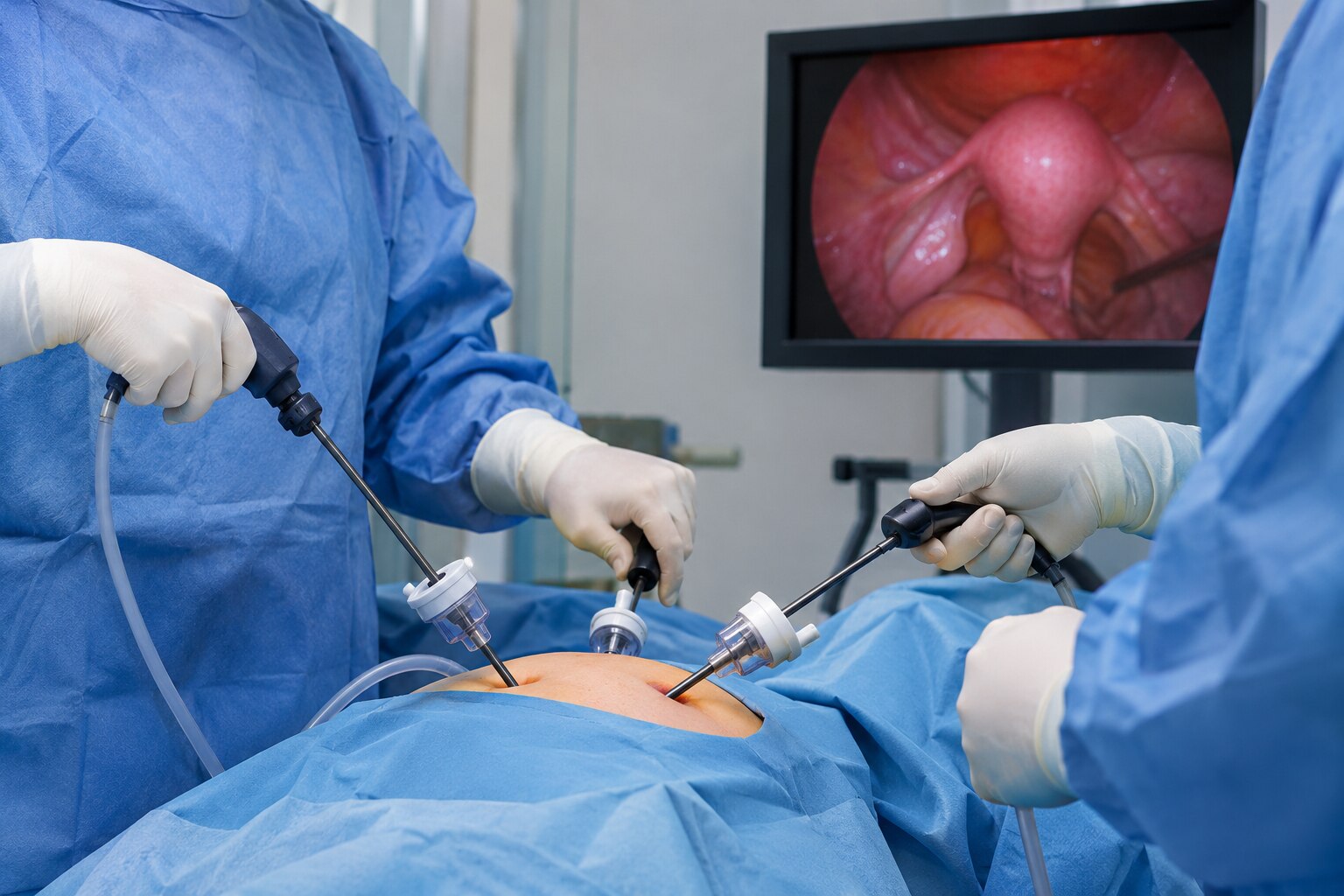
Once contractions, bleeding, leaking fluid or reduced fetal movement bring you to hospital, the team first decides whether you are in established labour and whether you or your baby need urgent care. You will understand what to bring, what happens at each labour stage, how a vaginal birth plan can change, and what recovery checks continue before discharge.
Key takeaways
- Go to maternity triage for regular contractions, leaking fluid, bleeding or reduced fetal movements.
- Bring identification, medical records, medicines, baby clothes and essentials for your support person.
- Ask how labour progress, fetal monitoring and pain relief options will be assessed.
- Seek urgent help for heavy bleeding, fever, severe pain or worsening symptoms after discharge.
Before admission: what to bring and what happens at triage
If you reach hospital with regular contractions, leaking fluid, vaginal bleeding, reduced fetal movements or severe pain, go to maternity triage rather than waiting for admission. Understanding what happens during normal delivery in Thane starts with this safety check: arrival does not automatically mean you are in established labour or must stay.
- Register with identification and show your antenatal records. Keep blood-group information, scan reports, prescriptions and a current medicines list together.
- Tell the midwife or doctor when contractions began, how far apart they are, whether your waters broke, and whether you have bleeding or reduced fetal movement.
- The team checks your pulse, blood pressure, temperature, abdominal findings, contraction pattern and the baby’s heart rate. They assess the baby’s position and review pregnancy risks.
- A vaginal examination is offered when its result will change management. It can show cervical dilatation, effacement and whether labour is progressing; it is not automatically repeated at every visit.
- The clinician explains whether you need admission, observation or discharge with clear return instructions. Heavy bleeding, abnormal fetal heart rate, maternal illness or another concern can change the delivery plan.
Carry comfortable clothing, underwear, maternity sanitary pads, toiletries, phone and charger, prescribed medicines, and feeding or support items requested by the hospital. Pack loose newborn clothes, nappies and a receiving blanket. Keep these in a labelled bag so your companion can find them quickly.
From admission to established labour in the labour ward
After admission, registration is completed, your antenatal records and scan reports are reviewed, and the team explains consent, examinations, monitoring and possible changes to the birth plan. You change into labour-ward clothing and discuss what you may eat or drink; restrictions depend on your condition and the likelihood of anaesthesia.
If comparing normal delivery care in Thane, ask how the unit manages monitoring, pain relief, assisted birth and emergency caesarean birth.
The admission assessment usually includes:
- A midwife or doctor checks your pulse, blood pressure, temperature, pain, bleeding and fluid loss.
- Abdominal examination assesses the baby’s lie, position and descent.
- A vaginal examination records cervical dilatation, effacement and membrane status when clinically needed.
- The fetal heart rate is checked with a handheld Doppler or electronic monitor, using a frequency suited to your risk and labour findings.
Low-risk labour is not managed like high-risk labour. If your observations and the fetal heart rate remain reassuring, intermittent checks let you move, change position and use a birth companion without continuous monitoring.
The team uses continuous electronic fetal monitoring when risk factors or concerns arise, such as an abnormal heart-rate finding, significant bleeding, fever, induction or maternal illness. A concerning trace prompts review alongside contractions, examination findings and your condition; it does not automatically mean caesarean birth. Regular contractions with continuing cervical opening mark established labour.
The stages of labour, pain relief and judging progress
Early labour begins with contractions that become longer, stronger and closer together while the cervix softens and opens. Active labour is commonly considered to begin around 6 centimetres of dilation and continues until the cervix reaches 10 centimetres.
Progress is judged by cervical dilation and effacement, the baby’s descent and position, contraction pattern, and your condition and the fetal heart rate.
- The pushing stage starts at full dilation and ends when the baby is born. You may push with your natural urge, or the midwife or doctor may guide your efforts. Upright, mobile, kneeling or side-lying positions can be used when safe, including with an epidural.
- The placental stage begins after birth and ends when the placenta and membranes come out. Active management usually includes oxytocin and timely delivery of the placenta; it reduces postpartum haemorrhage risk but can cause side effects, so discuss it with your clinician.
Pain relief depends on your preferences, labour stage and clinical condition.
| Option | What it involves | Key point |
|---|---|---|
| Breathing, movement, massage or water | Coping techniques and position changes | No medicine; water depends on facility availability |
| Nitrous oxide | Inhaled gas during contractions | Fast-acting, but relief is limited |
| Injectable medicine | An opioid or other prescribed drug | Can cause drowsiness and affect timing of use |
| Epidural | Anaesthetic delivered near spinal nerves | Strong relief; requires anaesthetic assessment and extra monitoring |
An epidural does not mean labour has become abnormal. The team may recommend changing the plan if dilation stalls, the baby remains distressed or malpositioned, bleeding becomes heavy, or your health changes.
Birth, newborn care and changes to the delivery plan
Once the cervix is fully dilated, the second stage begins. You push with contractions while the team checks your position, vital signs and the baby’s heart rate.
As the head and shoulders are born, the baby is dried, kept warm and assessed for breathing, colour and tone; skin-to-skin contact and early feeding follow when both of you are stable.
The third stage ends when the placenta and membranes come out. The team checks the placenta, examines your vagina and perineum, and repairs a tear or episiotomy with local anaesthetic or regional analgesia. They also watch for heavy bleeding, because postpartum haemorrhage needs immediate treatment.
A planned vaginal birth can change when continuing becomes less safe. Common reasons include:
- A persistent abnormal fetal heart-rate pattern suggesting the baby is not coping with labour.
- Cervical dilatation or descent that stops despite adequate contractions.
- A breech or transverse position, an obstructed birth, or a cord complication.
- Heavy bleeding, severe maternal illness, or exhaustion that makes further pushing unsafe.
- Failure of vacuum or forceps birth, or a situation where assisted birth is unsuitable.
Vacuum or forceps can shorten the second stage when the baby needs prompt birth and vaginal delivery remains safe. A caesarean becomes safer when the baby cannot be delivered safely through the vagina, or when urgent birth is needed and assisted delivery is not appropriate.
A normal-delivery doctor in Thane or a delivery-planning doctor in Thane should explain these decision points rather than promise one birth method. Eva Bloom Clinic - +919326019481 can help you prepare questions about monitoring, assisted birth, emergency caesarean delivery and newborn stabilisation.
Related services
Normal Delivery & C Section Delivery Choosing the right doctor for childbirth is an important step towards a safe and comfortable pregnancy journey. View service → |
Complete Maternity Care ₹1000 For complete maternal care, consult Dr. Kavita Velankar at Eva Bloom Clinic. View service → |
The first two hours, discharge and recovery at home
During the first two hours after birth, staff repeatedly check your bleeding, uterine firmness, pulse, blood pressure, temperature, pain, urination and any perineal tear or stitches. They also assess the baby’s breathing, temperature, colour and feeding.
If both of you are well, expect immediate skin-to-skin contact and help with the first breastfeed; urgent treatment takes priority if either of you needs stabilisation.
Before discharge, the team confirms that your vital signs are stable, bleeding is not excessive, pain is manageable, you can pass urine and you understand wound care, medicines, breastfeeding support and follow-up. Your baby receives a clinical examination, feeding assessment and any required newborn screening or vaccinations.
Ask who to call at night and when the postnatal review is due.
| Expected recovery at home | Seek urgent medical advice |
|---|---|
| Bleeding gradually changes from red to brown or pink, then pale, over several weeks | Soaking pads rapidly, passing large clots, feeling faint or unusually weak |
| Mild soreness from stitches or uterine cramps that improves with recommended pain relief | Severe or worsening abdominal, pelvic or perineal pain |
| Tiredness and emotional changes that improve with rest and support | Fever, foul-smelling discharge, breathing difficulty, chest pain, severe headache or vision changes |
Increasing bleeding is not a normal recovery stage. Contact your maternity unit promptly rather than waiting for the scheduled appointment.
Frequently asked questions
What should you bring when going to hospital for labour?
Bring identification, pregnancy records, test reports, prescribed medicines, comfortable clothing, toiletries, phone chargers and newborn clothes. Pack essentials for your support person as well.
What happens during maternity triage?
The maternity team checks your symptoms, contractions, bleeding or fluid leakage, fetal movements and vital signs. They assess whether you are in established labour and decide whether you need admission, observation or advice to return later.
How is progress judged during labour?
The team assesses contraction pattern, cervical dilation and effacement, the baby's position and fetal heart rate. They use these findings to monitor progress and discuss pain relief or changes to the delivery plan.
What happens during the first two hours after delivery?
The team monitors your bleeding, blood pressure, pulse, pain, uterus and recovery. They also assess the newborn, support early feeding and explain warning signs, follow-up and care at home before discharge.
Keywords