Infertility care starts with a structured assessment of both partners, not with an automatic decision to pursue IVF. By the end, you will know when to seek help, what the first appointment and investigations involve, and how clinicians choose between monitored intercourse, medication, IUI and IVF.
Key takeaways
- Seek help after 12 months under age 35, or six months at 35 and older.
- Both partners should attend the first consultation and bring relevant medical records.
- Testing may include semen analysis, hormone tests, ultrasound and tubal assessment.
- Ask how medicines, monitoring, IVF steps and follow-up will fit your plan.
When should you seek infertility help, and who should attend?
Seek an infertility evaluation after 12 months of regular, unprotected intercourse if the woman is under 35. If she is 35 or older, book an appointment after six months because fertility declines with age and timely assessment matters.
Book sooner if either partner has a known or suspected fertility problem:
- Irregular or absent periods
- Endometriosis
- Previous pelvic surgery or pelvic infection
- Recurrent miscarriage
- Previous ectopic pregnancy
- Testicular disease, testicular surgery or sexual difficulties
Both partners should attend the first appointment, or provide complete medical information if one cannot be present. The clinician will ask about how long you have been trying, contraception, intercourse frequency and timing, previous pregnancies, infections, operations, medicines, long-term illnesses, smoking, alcohol and relevant family history.
Evaluating only the woman can delay effective treatment because sperm-related factors contribute to many fertility problems. A semen analysis is normally part of the initial work-up, not a test postponed until she has completed months of investigations.
Understanding what happens during infertility treatment in Thane starts with assessing both partners from the beginning, followed by tests chosen for the findings.
What happens during the first infertility consultation in Thane?
At an infertility consultation in Thane, expect questions before any treatment decision. At Eva Bloom Clinic - +919326019481, the clinician will map your menstrual cycles: the first day of each period, cycle length, missed periods, bleeding pattern, pain and signs of ovulation.
They will review previous pregnancies and outcomes, contraception, duration of trying, sexual history, intercourse difficulties, pelvic or testicular symptoms, operations, infections and medical conditions.
Bring these items to a fertility treatment clinic in Thane:
| Item | What to bring or discuss | Why it matters |
|---|---|---|
| Medication record | Prescription medicines, supplements and allergies | Some treatments affect ovulation, pregnancy planning or test choices |
| Previous records | Reports from earlier consultations, scans and blood tests | Repeating an unnecessary investigation wastes time |
| Both partners’ information | Medical history, symptoms and previous procedures | Sperm-related factors need assessment alongside female factors |
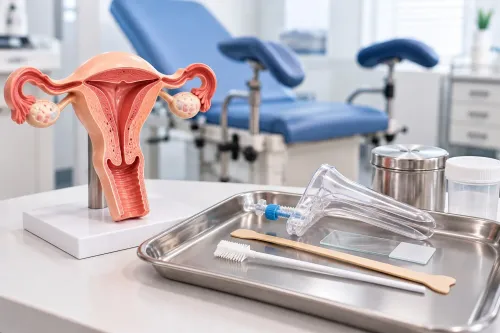
The clinician may perform a general or pelvic examination when symptoms, examination findings or treatment planning make it useful. An examination does not replace testing both partners.
Ask which tests are essential now, which depend on cycle timing, how each result will change treatment and when you should return. You may leave with a plan for ovulation tracking, semen analysis, blood tests, ultrasound or tubal assessment rather than a prescription on the first day.
Related service
Infertility Treatment ₹1000 Consult Dr. Kavita Velankar, at Eva Bloom Clinic for fertility related issues. View service → |
Which fertility tests are used, and what can each one show?
Fertility testing identifies possible causes, but each test answers a limited question. Semen analysis measures concentration, movement and shape in one sample; an abnormal result is commonly repeated because results vary.
| Test | What it can show | Timing or limit |
|---|---|---|
| Semen analysis | Sperm concentration, movement and shape | Initial work-up; repeat an abnormal result |
| Ovulation assessment | Whether ovulation is occurring | Use cycle history, urine tests, ultrasound or progesterone about seven days before the expected next period—not automatically day 21 |
| TSH and prolactin | Thyroid or prolactin-related hormonal problems | Order when symptoms or history indicate |
| Pelvic ultrasound | Uterus, ovaries, antral follicles, cysts and fibroids | Cannot confirm that fallopian tubes are open |
| HSG | Contrast passing through the uterus and tubes on X-ray | Tubal patency test |
| Saline infusion sonography or HyCoSy | The uterine cavity and tube flow using ultrasound | Alternative tubal assessment |
| AMH and antral follicle count | Likely response to ovarian stimulation | Do not diagnose infertility, measure egg quality or reliably predict natural conception |
Irregular cycles require different timing or repeat ovulation testing. Laparoscopy with dye is more invasive and is reserved for selected concerns such as suspected endometriosis, previous pelvic infection, prior ectopic pregnancy or another pelvic abnormality. The same limits apply during an infertility consultation in Thane: no single result establishes the diagnosis.
How is the infertility treatment plan chosen after diagnosis?
A treatment plan is chosen by matching the diagnosis with the least intensive option likely to work, not by reacting to one test result. In the infertility treatment process in Thane, the clinician considers your age, ovarian reserve, ovulation, semen findings, tubal status, duration of infertility, previous treatment and preferences.
AMH or an ultrasound alone should not decide the plan.
- If ovulation and the fallopian tubes are normal and sperm findings are reassuring, observation or timed intercourse may be appropriate.
- Treat the underlying problem first when it explains the difficulty, such as a condition affecting ovulation or another correctable factor.
- Ovulation-induction medicine suits selected ovulation problems. The drug and dose depend on the cause: treatment for anovulation linked to polycystic ovary syndrome is not interchangeable with treatment for reduced ovarian function or unexplained infertility.
- IUI places prepared sperm inside the uterus around ovulation. It may suit unexplained infertility or mild sperm-factor infertility when the tubes are open; it is unsuitable when both tubes are blocked or sperm problems are severe.
- IVF may be considered for blocked tubes, significant sperm-factor infertility, some cases involving age or reduced ovarian reserve, or unsuccessful simpler treatment.
What happens during infertility treatment in Thane also includes follow-up: the clinician reviews treatment response, pregnancy results and side effects before repeating, escalating or changing the next cycle.
What happens during an ovulation-induction cycle?
1. You start the prescribed ovulation-induction medicine on specific cycle days. The medicine, dose and schedule depend on whether ovulation is absent, irregular or being assisted despite occurring.
2. A baseline assessment may take place before medication, using an ultrasound and other checks if needed. This confirms whether the cycle is suitable for stimulation.
3. Follicular ultrasound monitoring then measures follicle growth and the thickness of the uterine lining. The clinician may adjust the dose or cancel the cycle if the response is too weak or too strong.
4. When a mature follicle is present, the clinician may prescribe a trigger injection for final egg maturation and more precise timing. Follow the instructions for intercourse or intrauterine insemination (IUI) within the planned window.
5. Do not increase the dose or add an extra trigger yourself. Monitoring matters because an excessive response raises the chance of multiple pregnancy and ovarian hyperstimulation syndrome.
6. After the cycle, take a pregnancy test on the advised date rather than interpreting early symptoms. A negative result prompts review of timing, medication response, semen findings and tubal status before repeating or changing treatment; a positive result leads to early pregnancy follow-up.
This is a key part of the infertility treatment process in Thane.
What happens during IVF, and what follow-up is required?
An IVF cycle usually starts with ovarian stimulation, followed by ultrasound monitoring and sometimes blood tests. A trigger medication completes final egg maturation before egg collection.
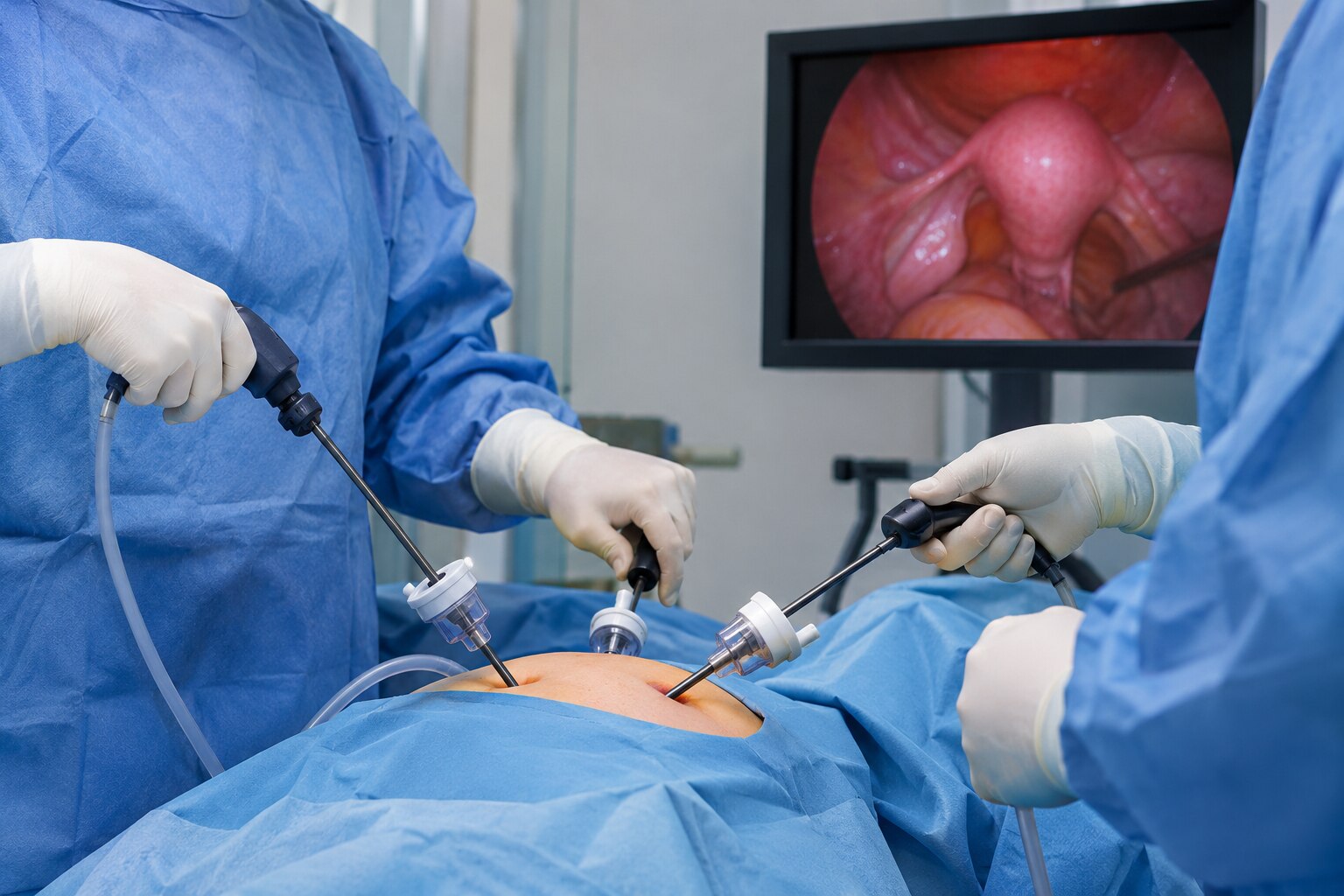
- Egg collection uses a needle passed through the vagina under ultrasound guidance, with sedation or anaesthesia under the clinic’s protocol. Follow fasting instructions, arrange transport home, and ask about expected pain and bleeding.
- In the laboratory, eggs are fertilised and embryos are cultured. An embryo may then be transferred to the uterus.
- Pregnancy testing happens on the date advised, followed by an early scan to confirm the pregnancy’s location and development.
The infertility treatment process in Thane can change at several points:
| Finding or decision | What happens next |
|---|---|
| Poor response | Stimulation may be adjusted or the cycle cancelled |
| Excessive response | Cancellation or another safety plan may reduce risks |
| Failed fertilisation | No embryo reaches culture or transfer |
| Abnormal embryo development | Transfer may not be possible |
| Embryos frozen | Transfer occurs in a later cycle |
Single-embryo transfer reduces the risk of twins or higher-order multiple pregnancy when the embryo and clinical circumstances make it suitable. Seek urgent medical advice for severe abdominal swelling or pain, breathlessness, fainting, heavy bleeding or reduced urination after stimulation or collection; these symptoms can signal ovarian hyperstimulation syndrome or ectopic pregnancy.
Frequently asked questions
When should you seek infertility help, and who should attend?
Seek an evaluation after 12 months of regular, unprotected intercourse if the woman is under 35, or after six months if she is 35 or older. Both partners should attend because fertility factors can affect either person.
What happens during the first infertility consultation in Thane?
The doctor reviews your menstrual, sexual, medical and surgical history, previous pregnancies, medicines and lifestyle. Bring prior reports, a list of medicines and details about cycle timing.
Which fertility tests are used, and what can each one show?
Tests can include semen analysis for sperm count and movement, blood tests for hormones and ovarian function, pelvic ultrasound for the uterus and ovaries, and tubal assessment for blocked fallopian tubes.
How is the infertility treatment plan chosen after diagnosis?
The plan depends on age, test results, duration of infertility, ovarian reserve, sperm findings, tubal status, previous treatment and your preferences. Options can include timed intercourse, ovulation induction, intrauterine insemination or IVF.
What happens during an ovulation-induction cycle?
You take prescribed fertility medicine, attend monitoring appointments with ultrasound and sometimes blood tests, and follow instructions about intercourse or insemination. The clinic adjusts treatment based on follicle development and safety.
Keywords